
Roughly 1 in 6 Americans who cosign a loan end up making payments themselves because the primary borrower stops paying — and for lower-income households, that single event can trigger a cascade of financial damage that takes years to untangle. I know this because I met Warren McBride at a CVS pharmacy on Stockton Boulevard in Sacramento on a Tuesday afternoon in late February 2026, and he was quietly asking the pharmacist whether a generic prescription qualified for the store’s discount assistance program. He was carefully counting change from a weathered billfold while he waited for the answer.
I introduced myself after he stepped away from the counter. When I mentioned I covered economic relief programs for American Relief, something shifted in his expression — not hope exactly, but recognition, like he’d been carrying a story that needed somewhere to go. We exchanged numbers, and two days later I sat down with him at a diner off Fruitridge Road to hear it.
A Steady Job, a Small Home, and One Very Bad Decision
Warren McBride has worked as a custodian for Sacramento Unified School District for eleven years. He earns approximately $38,500 a year before taxes — enough, in a different decade, to maintain a modest but stable life. He owns a small two-bedroom house in the South Sacramento neighborhood he’s lived in since 2009, and he rents the second bedroom to a roommate to help cover the mortgage. On paper, it sounds like a manageable life. In practice, 2023 broke it.
In March 2022, a former coworker Warren had known for nearly a decade asked him to cosign a $12,000 personal loan. The coworker — Warren declined to use his name — had taken a second job and was trying to consolidate credit card debt. Warren agreed. “He was like family to me,” Warren told me, stirring his coffee without drinking it. “I didn’t think twice. That’s what you do for people you trust.”
The lender, a regional credit union, had made no effort to contact Warren until the loan was already 90 days past due. By the time he understood the full picture, the outstanding balance — with interest and late fees — had grown to approximately $9,400. His credit score, which had been around 680, dropped to 541 within two months. The coworker has not been in contact since.
When the Property Tax Bill Arrived, the Math Stopped Working
Warren’s Sacramento County property tax bill comes due in two installments each year — the first in December, the second in April. In December 2022, he had managed to pay the first installment of $1,850. But by April 2023, he was making minimum payments on the defaulted loan to protect whatever remained of his credit, and the second installment of $1,860 went unpaid. Then December 2023 arrived, and he missed that installment too.
In California, property taxes that remain unpaid after June 30 of the fiscal year become “tax defaulted,” and the county begins a five-year redemption clock. If the full amount — including penalties and interest accruing at 1.5% per month — is not paid within that window, the county can ultimately sell the property at a tax sale. According to the California State Controller’s Office, tens of thousands of California properties enter tax default status every year, with lower-income homeowners disproportionately represented.
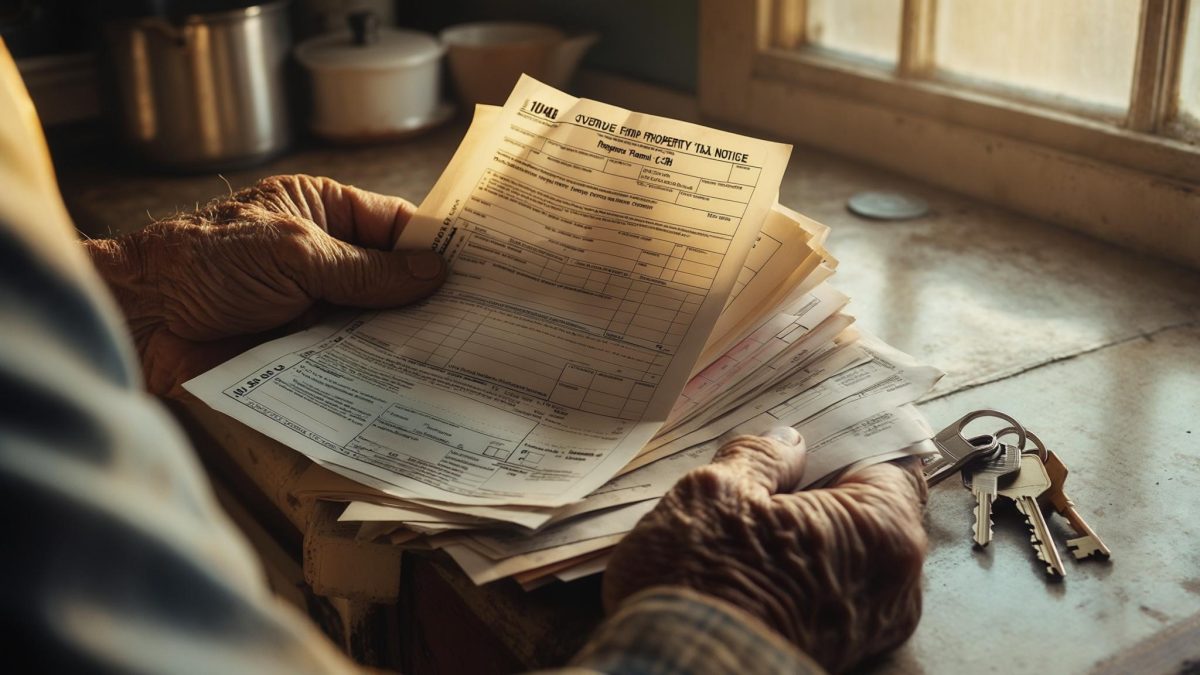
“I knew the letters were bad,” Warren told me. “But I kept putting them in a drawer. I couldn’t face it. I thought, if I open them, it becomes real.” By January 2026, the drawer held four envelopes. When he finally opened them, the total owed to Sacramento County — principal, penalties, and interest — was $4,217.38.
Finding Out What Actually Exists for People in His Position
When I asked Warren what his plan had been before we met, he laughed — a short, dry sound. “I didn’t have one. I was just hoping something would change.” That bitterness surfaced a few times during our conversation, and I think it was earned. He’d done the responsible thing for a decade — paid his mortgage, kept his job, stayed put in a neighborhood that kept getting harder to afford. The situation he found himself in wasn’t born of recklessness. It was born of trust.
After our diner meeting, I spent time walking Warren through what I’d found about relief options available specifically for his circumstances. I want to be clear: I was sharing publicly available program information, not advising him on what to do. What he did with it was entirely his call.
The LIHEAP enrollment was the unexpected piece. Warren hadn’t known it existed. “I always figured those programs were for people in worse shape than me,” he said. “I didn’t think a guy with a job and a house qualified for anything.” His household income, when calculated against the federal poverty guidelines, put him within the eligibility threshold for Sacramento County’s LIHEAP allocation.
The Outcome — and What Warren Is Still Carrying
By March 2026, Warren had enrolled in the Sacramento County installment plan and made his first payment of $845 toward the delinquent tax balance. He received LIHEAP assistance covering approximately $110 per month in utility costs for three months. The remaining $9,400 on the cosigned loan, however, is still his to manage — the lender has not settled, and Warren told me he’s paying $200 a month toward it, which barely covers the interest.
“I’m not out of it,” Warren said plainly when I followed up with him by phone in late March. “I’m just not drowning as fast. There’s a difference.” He’s right — and I think that distinction matters more than any tidy resolution. The installment plan doesn’t erase what’s owed; it creates a corridor through which he can walk without the immediate threat of losing his home. The cosigned loan is a separate weight he’s carrying alongside it.
His credit score, as of February 2026, was still in the low 570s. He told me he’d looked into whether he could dispute any aspect of the loan’s reporting given the circumstances, but the credit union’s records were accurate. “I signed the paper,” he said. “That part is on me. I’m bitter about it, yeah. But it happened.”
What Warren’s Story Reveals About the Gap in Economic Relief
What struck me most about Warren’s situation wasn’t the debt itself — it was how long he’d been unaware that structured options existed. He had avoided the county tax office for nearly a year out of shame and fear, not knowing that the office operates an installment program specifically designed for homeowners in default. He’d never heard of LIHEAP despite earning well below the income threshold for years.
The programs that could have helped Warren sooner weren’t hidden. They were listed on county websites, referenced in state documents, available through a phone call. But navigating them requires knowing they exist, having the bandwidth to search while managing a full-time job and a mounting pile of overdue letters, and being willing to make the call without feeling like you’ve failed. Warren checked all three of those boxes on a timeline that cost him approximately $800 in additional penalties that would not have accrued had he enrolled in the payment plan six months earlier.
According to the Benefits.gov database, dozens of federal and state assistance programs have income thresholds that extend well into the lower-middle-income range — yet awareness and enrollment remain persistently low among working homeowners who don’t identify as “low income.” Warren McBride is exactly that person. He went to a pharmacy to ask about a prescription discount. He wasn’t looking for economic relief. But economic relief, it turned out, was what he needed.
I left our second conversation with the sense that Warren would be okay — not because everything had resolved, but because he’d stopped letting the drawer fill up. That, for someone carrying what he’s carrying, counts for something.
Related: A Firefighter’s COBRA Bill Hit $1,847 a Month — More Than His Rent — After a Friend’s Loan Default
Related: Your IRS Refund Tracker Went Blank After Filing — Here’s What That Actually Means in 2026




Leave a Reply