
The break room at the Wake County Department of Social Services smells like burnt coffee and fluorescent light. I was there on a Tuesday afternoon in late February 2026, following up on a separate story, when a social worker named Patricia flagged me down. “You should talk to one of my clients,” she said, pressing a sticky note into my hand. “He’s trying to do everything right and it’s still not working.” The name on the note was Dale Velasquez.
I called Dale that same evening. He picked up on the second ring, somewhere between a delivery stop in Garner and his next drop in Cary. He agreed to meet me at a diner off South Wilmington Street the following Saturday — his only day off that week.
A Resume That Should Have Meant More
Dale Velasquez is 27 years old, compact and deliberate in the way people get when they’re used to moving fast and thinking faster. He drives for FedEx out of a Raleigh hub, pulling routes that sometimes stretch to nine or ten hours. He has a master’s degree in public health from NC State — a credential he earned in 2022, two years before he realized the job market for public health administrators wasn’t what the brochure suggested.
“I thought the degree was going to open doors,” Dale told me, wrapping both hands around a coffee mug. “And maybe it will eventually. But right now I’m delivering packages, and the loan bill doesn’t care what I’m driving.”
That loan bill is $68,400 — the balance remaining on federal graduate student loans after three years of income-driven repayment. His monthly payment under the SAVE plan, before the plan faced legal challenges in 2025, had been approximately $310. After courts froze the SAVE program, Dale’s servicer placed him in a general forbearance, which sounds like relief but isn’t. Interest continued accruing at a rate that added roughly $340 per month to his principal.
Dale and his wife Camila bought their home in east Raleigh in early 2023, when mortgage rates had already climbed past six percent. Their monthly payment — principal, interest, taxes, and insurance — landed at $1,870. Combined with the childcare bill for their two-year-old daughter, Marisol, and the student loan payment, Dale was committed to roughly $3,600 a month in fixed obligations before groceries, gas, or utilities.
His gross annual income from FedEx is approximately $58,000. After taxes and benefits deductions, he takes home around $3,900 per month. The math, as Dale put it when we sat down, “has never actually worked.”
Where the $3,200 Was Hiding
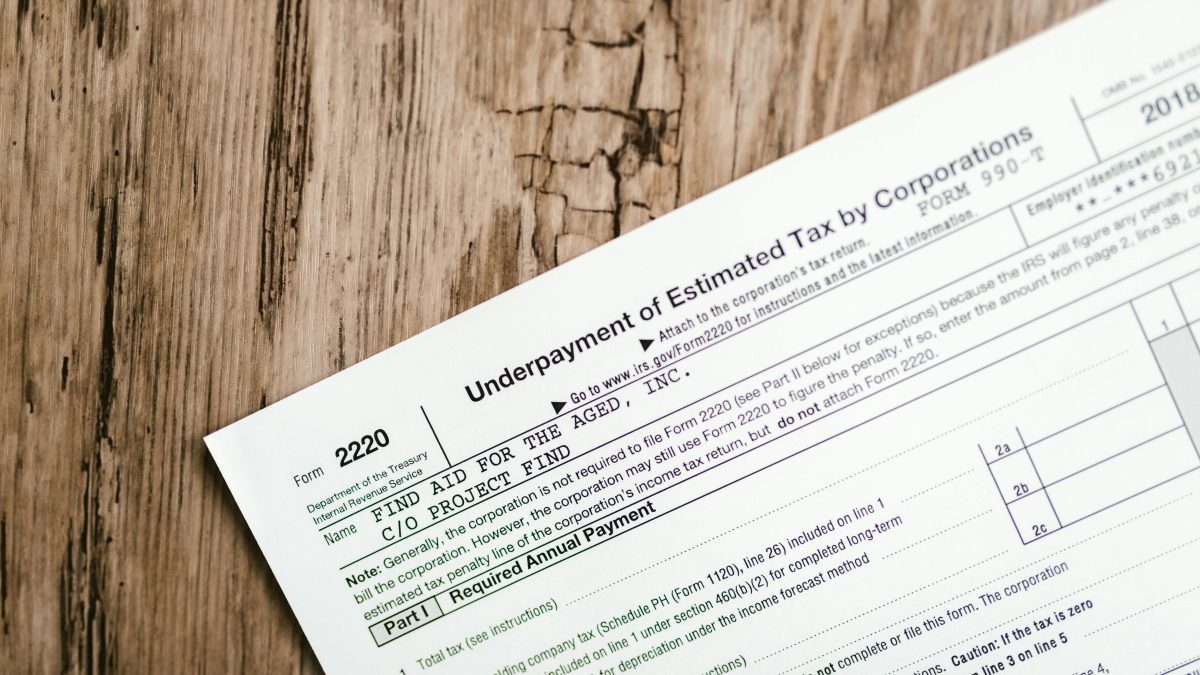
The turning point in Dale’s story isn’t dramatic. It doesn’t involve a phone call that changed everything or a check that arrived at the last minute. It involves a tax return he almost filed incorrectly — and a free filing appointment at a VITA site that his county social worker, Patricia, arranged for him in January 2026.
Dale had been filing his own taxes using a free online tool since college. He knew he qualified for some credits, but he wasn’t certain which ones and, frankly, he didn’t have the bandwidth to investigate. “I’d file, get whatever came back, and move on,” he told me. “I didn’t know I was leaving money on the table.”
What the VITA volunteer found was a combination of credits Dale had either underclaimed or missed entirely. The Child and Dependent Care Credit, based on Marisol’s documented daycare expenses of roughly $16,900 for 2025, yielded a credit of approximately $1,050. The Child Tax Credit added another $2,000. A partial American Opportunity-type credit wasn’t available to Dale — he’d exhausted those as an undergraduate — but the volunteer identified a student loan interest deduction of $2,500 that Dale had not properly claimed in prior years, which reduced his taxable income and affected his overall refund calculation.
Total additional relief compared to what Dale had estimated on his own: approximately $3,200. His refund for tax year 2025 came to $3,740.
The Part That Didn’t Get Fixed
A $3,740 refund sounds like a lifeline, and for Dale it was — but it’s worth being precise about what it could and couldn’t do. He and Camila sat down the night the deposit hit and made a list. The mortgage was current but had been within two weeks of a late payment in November 2025, when a FedEx route cutback cost Dale roughly $600 in lost hours. They allocated $1,200 of the refund toward rebuilding a cushion in their checking account.
Another $1,500 went toward a balance on a credit card they’d leaned on during those tight November weeks. The remaining roughly $1,000 was set aside for Marisol’s next round of immunizations and an overdue car maintenance appointment on the 2019 Honda Pilot they use for family transportation.
The student loans remained untouched. The mortgage balance didn’t move. Camila, who had been working part-time at a dental office, left that position in March 2026 when the cost of a second childcare slot for Marisol’s younger sibling — Camila is due in June — exceeded what Camila was bringing home. The family’s income is effectively back to Dale’s salary alone.
“I’m not complaining,” Dale said when I asked how he was holding up. “I knew what I was signing when I bought the house. I knew what the loan was going to cost. I just didn’t account for everything happening at once.” He paused. “Marisol was not in the plan, to be honest. Best thing that ever happened to us. But not in the plan.”
What the County Social Worker Actually Does
Patricia — the social worker who handed me Dale’s number — works in the county’s economic self-sufficiency unit. She’s not a tax professional or a financial advisor. Her job, as she described it to me briefly before policy prevented further comment, is to connect clients with resources they don’t know exist. The VITA referral is one of the most common things she does.
Volunteer Income Tax Assistance (VITA) sites are IRS-sponsored programs staffed by trained volunteers. According to the IRS, VITA sites generally serve households earning $67,000 or less per year, people with disabilities, and limited English-speaking taxpayers. The service is free, and the preparation includes review of credits that many self-filers miss.
The Honest Accounting
When I asked Dale what he wished he’d known sooner, he didn’t say what I expected. He didn’t wish he’d skipped the graduate degree or bought a smaller house. He wished he’d known about the VITA site two years earlier.
He’s not wrong to do that math. The Child and Dependent Care Credit has been available in its current structure for years, and the student loan interest deduction has existed since 1997 under federal law — yet the Government Accountability Office has documented repeatedly that low-to-middle income filers leave credits unclaimed at significantly higher rates than higher-income filers who can afford professional tax preparation.
Dale fits that pattern exactly. He’s educated, deliberate, and organized — and he still missed thousands of dollars over multiple filing years simply because he didn’t know what to look for and couldn’t afford someone to look for him.
The morning I left the diner, Dale got a call about an additional Saturday route. He took it. Camila was home with Marisol, and the second baby was due in ten weeks. The $3,740 refund was already mostly allocated. He put his phone back in his jacket pocket and said, almost to himself: “One month at a time.”
I drove back to my office thinking about Patricia’s sticky note, and about how many names might be on similar notes that never got passed to anyone. Dale Velasquez found $3,200 he was owed. The structural pressures that put him in that diner booth — the loans, the mortgage, the childcare math — were still exactly where he left them.
Related: The IRS Flagged Her Return for Manual Review — A Minneapolis Daycare Owner’s 78-Day Wait for $4,200




Leave a Reply