

Most people assume the hardest part of running a small business is getting started. Robert Kowalski would tell you that’s wrong. The hardest part, he’d say, is watching something you built with your own hands slowly become obsolete — not because you stopped working, but because the world moved on without asking your permission.
When I met Robert at his shop on the south side of Milwaukee on a Tuesday morning in late February 2026, he was elbow-deep in a 2009 Ford F-150. The newer vehicles in the lot — a 2023 Chevy Equinox, a 2024 Honda CR-V — sat untouched. “I can’t touch those,” he told me, wiping his hands on a shop rag. “Dealer locks me out. The software won’t talk to my scanner.”
That single sentence explained a lot. Robert Kowalski, 52, has operated his independent auto repair shop for 18 years. He employs two part-time mechanics and has built a loyal customer base on word of mouth. But over the past three years, his annual revenue has dropped by roughly 30 percent — not because he lost customers, but because the cars those customers drive have become increasingly inaccessible to independent shops without proprietary dealer diagnostic systems that cost tens of thousands of dollars to license.
A Business Built on Loyalty, Undercut by Technology
Robert was not interested in my sympathy when we first spoke. He’s the kind of man who uses the phrase “figure it out” the way other people use punctuation. He grew up in a working-class household in Racine, Wisconsin, apprenticed under a family friend at 17, and opened his own shop at 34 with a small business loan and what he described as “more confidence than sense.”
For most of those 18 years, the shop ran well. He paid off the loan. He hired staff. He bought a house. His wife, Diane, works as a school paraprofessional, and her income — roughly $32,000 a year — has covered household basics like groceries and utilities. Robert’s shop income was supposed to cover everything else: savings, retirement, the future.
That plan started fraying around 2022. Newer vehicles, particularly those with advanced driver-assistance systems and over-the-air update capabilities, increasingly route diagnostic and repair functions through manufacturer-controlled software platforms. Independent shops either pay steep licensing fees or turn the cars away. Robert turned them away.
“I’m not complaining about the work,” Robert told me, leaning against his service counter. “I still got plenty of work. It’s just the work doesn’t pay like it used to, because the jobs that pay the most — I can’t do them anymore.”
The Letter That Changed the Conversation
Robert might have kept grinding through the revenue decline indefinitely. He’s done it before. But in November 2025, his son Marcus received an acceptance letter from a university in Minnesota. The annual cost of attendance: $45,000. Marcus is 18 and had worked hard for the acceptance. Robert didn’t want to be the reason he didn’t go.
“That number hit me like a brick,” Robert said. “I sat with it for about a week before I told Diane. I didn’t want her to worry.” His wife’s $32,000 income and his declining shop revenue — he estimated his net business income had dropped to roughly $58,000 in 2025, down from approximately $83,000 in 2022 — left almost no room for tuition payments, let alone the retirement savings he’d been deferring for years.
What Robert did not know at that point — and what took him months to confront — was that as a self-employed business owner, he had access to several tax-advantaged tools and federal relief mechanisms he had never used. He’d filed his taxes with a basic software program every year and assumed anything more complicated was “for people with accountants and beach houses.”
What Robert Had Been Leaving on the Table
A neighbor — a retired HR manager named Carol — eventually pushed Robert to sit down with a tax professional in January 2026. What he learned in that meeting, he described to me as “embarrassing and infuriating at the same time.”
As a self-employed individual, Robert was eligible to contribute to a SEP-IRA (Simplified Employee Pension Individual Retirement Account), which allows self-employed people to contribute up to 25 percent of net self-employment income — or up to $69,000 for tax year 2025, according to IRS guidance on SEP plans. He had never opened one. Every year he hadn’t contributed was a year he’d missed both the tax deduction and the compounding growth.
He also learned about the Self-Employed Health Insurance Deduction — a provision that allows self-employed individuals to deduct 100 percent of health insurance premiums paid for themselves and their family from their adjusted gross income, per IRS Publication 535. Robert had been paying roughly $780 per month in premiums — nearly $9,360 per year — without ever deducting it properly.
“She showed me the numbers,” Robert said, referring to the tax preparer. “I had probably left close to $12,000 in deductions on the table just in the last two years. I didn’t know. Nobody told me.” He paused. “Or maybe somebody did and I wasn’t listening. That’s possible too.”
The Turning Point — and What It Actually Fixed
By the time I spoke with Robert in late February 2026, he had filed an amended return for tax year 2024 and was working through his 2025 return with the same preparer. The amended 2024 return resulted in an additional refund of approximately $3,100 — money he had overpaid because he hadn’t claimed the health insurance deduction or the full self-employment tax deduction.
He also opened a SEP-IRA in February 2026, which — because SEP contributions for tax year 2025 can be made up until the tax filing deadline including extensions — allowed him to make a retroactive contribution for 2025. Based on his estimated net self-employment income of $58,000, his maximum SEP contribution for 2025 was approximately $14,500. He contributed $8,000, which he described as “every dollar I could scrape together right now.”
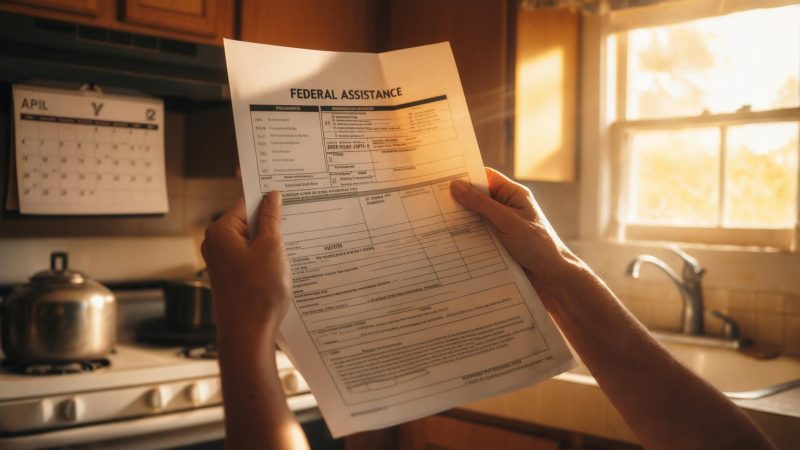
The FAFSA piece was something Robert had initially refused to engage with. “I thought that was welfare,” he told me, and then caught himself. “I know that’s not the right word. I just — I didn’t want to be asking for things.” His tax preparer pointed out that the Free Application for Federal Student Aid is a standard financial process used by millions of families across all income levels, and that Marcus’s eligibility for grants, subsidized loans, or work-study programs depended entirely on submitting the form. Robert filed it in January 2026.
The Outcome — Partial, Complicated, and Real
I want to be honest about what changed for Robert Kowalski and what didn’t. The $3,100 refund helped. The SEP-IRA is a start — a real one, even if it’s 18 years late. The FAFSA is filed. These are meaningful steps.
But Robert’s shop still faces structural pressure from the automotive industry’s shift toward proprietary technology. His revenue has not recovered. Marcus’s tuition bill has not shrunk. And Robert, by his own admission, spent years dismissing the very tools that might have cushioned this moment.
When I asked Robert what he wished he’d done differently, he didn’t hesitate. “Opened that retirement account the first year I was profitable. That’s it. Everything else I could have figured out. But 18 years of not putting money away — you can’t get that back.”
Marcus is scheduled to start university in September 2026. The family is piecing together a combination of whatever federal aid comes through, a modest parent loan Robert is reluctant about but resigned to, and Marcus working part-time on campus. It is not a clean solution. It is a real one.
As I left the shop that Tuesday morning, Robert was back under the F-150. The newer cars in the lot hadn’t moved. He didn’t look up when I said goodbye. He just raised one hand, the way mechanics do — a gesture that means both acknowledgment and dismissal. He had work to do. He always had work to do. The question was whether the work would be enough, and that question, I realized, had no clean answer for him yet.
Vivienne Marlowe Reyes is a Senior Tax & Stimulus Writer at American Relief. This article reflects one individual’s reported experience and does not constitute financial, tax, or legal advice.



Leave a Reply