

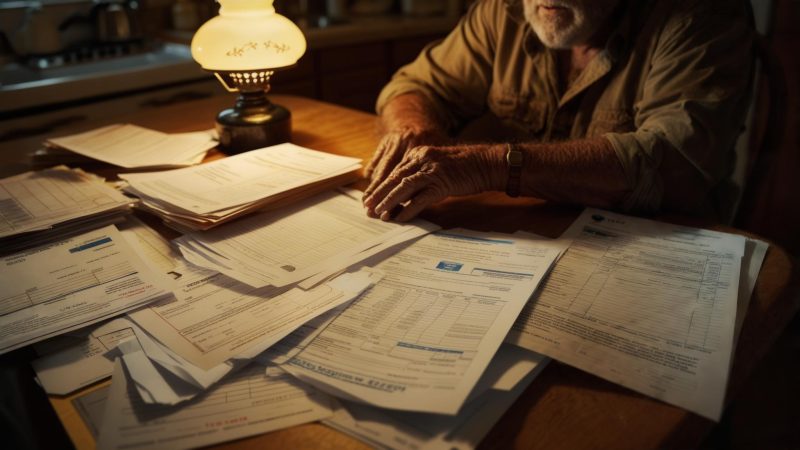
The folder was rubber-banded shut and sitting on Samantha Reeves’s kitchen counter when I arrived at her apartment in Denver’s Capitol Hill neighborhood on a Wednesday morning in early March. She’d just come off a 12-hour night shift. Her four-year-old daughter, Maya, was still at daycare. The folder held two years of W-2s, a 1098-E for her student loan interest, and a sticky note that read: Figure this out finally.
“I kept telling myself I’d deal with taxes properly,” she said, pulling the rubber band off and setting it on the table like punctuation. “And then I’d collapse on the couch instead.”
A Budget With No Margin
Samantha Reeves, 31, is a registered nurse at a community hospital on Denver’s west side. She earns roughly $72,000 a year in base salary — a number that sounds stable until you map it against the city she lives in. Denver’s cost of living has climbed steadily, and her monthly budget leaves almost nothing to spare.
Daycare for Maya runs $1,400 a month — nearly identical to Samantha’s rent. Her federal student loan balance sits at $38,000, left over from nursing school. Her ex-partner disappeared about two years ago, leaving no financial support and no co-parenting arrangement. She picks up overtime shifts when the hospital offers them, but she told me she’s been feeling the edges of burnout for months.
She’d filed her taxes the previous two years using a free online tool, clicking through quickly, claiming Maya as a dependent, and accepting whatever number came out. She didn’t know there were credits specifically designed for her situation. “I thought tax credits were for people with complicated portfolios,” she told me, half-laughing. “Not nurses who can barely find a pen.”
What She’d Been Leaving Behind
When Samantha finally sat down with a tax preparer at a volunteer VITA (Volunteer Income Tax Assistance) site in late February 2026 — filing for tax year 2025 — two credits came up almost immediately: the Child and Dependent Care Credit and the Child Tax Credit.
The Child and Dependent Care Credit, administered through the IRS, allows working parents to claim a percentage of what they paid for qualifying child care. For one qualifying child, up to $3,000 in eligible expenses can be counted. The percentage depends on adjusted gross income — for earners above $43,000, the credit rate is 20 percent. That works out to a maximum of $600 for a single child.
Samantha had paid $16,800 in daycare costs in 2025. Only $3,000 of that qualified for the credit calculation, but $600 back was $600 she hadn’t been claiming.
The bigger number came from the Child Tax Credit. For tax year 2025, the Child Tax Credit remains at $2,000 per qualifying child, with up to $1,700 refundable as the Additional Child Tax Credit for taxpayers who don’t owe enough in taxes to absorb the full amount. Samantha’s income put her well within the eligibility range — the phase-out begins at $200,000 for single filers, according to IRS guidance.
Between the Child Tax Credit, the refundable portion, the Child and Dependent Care Credit, and deducting $2,500 in student loan interest — the maximum allowed under current law — Samantha’s refund came in at approximately $2,600. The previous year, filing on her own, she’d received $310.
The Dependent Care FSA She Didn’t Know Existed
What complicated Samantha’s feelings wasn’t just the refund — it was learning about a benefit she’d been ignoring through her employer for three years running. Her hospital offered a Dependent Care Flexible Spending Account (FSA), which allows employees to set aside up to $5,000 pre-tax per year for qualifying child care expenses.
For someone in Samantha’s tax bracket, contributing $5,000 to a Dependent Care FSA would reduce her taxable income by $5,000 — saving her roughly $1,100 to $1,200 in federal income taxes annually, on top of reducing her Social Security and Medicare tax liability. She hadn’t enrolled because she’d seen the open enrollment email every year and figured it was “probably for families with more money to move around.”
“The preparer explained that I can’t double-dip — the FSA and the care credit both pull from the same pool of expenses,” Samantha told me. “So going forward I have to actually think about which one works better. I didn’t know there was math involved. I thought taxes were just — you either owe or you don’t.”
The Limits of What a Refund Can Do
I want to be clear about what $2,600 does and doesn’t mean in Samantha’s life, because she was clear about it with me. The refund covered roughly two months of Maya’s daycare. It did not touch the student loans. It did not create an emergency fund. She used a portion to pay down a credit card she’d put groceries on in January when overtime dried up, and she put the rest in savings — aware it would likely disappear by summer if something broke in the apartment.
Samantha is enrolled in the Dependent Care FSA for 2026 — she made sure of it during her hospital’s January benefits window. But she sat with a specific kind of frustration when she calculated what she’d left unclaimed over the previous two tax years.
What Changed — and What Hasn’t
When I asked Samantha what she’d do differently, she didn’t give me the answer I expected. She didn’t say she wished she’d found a better accountant sooner, or that she’d spent more time researching credits. She said she wished the information had found her.
“I work 36 to 48 hours a week caring for other people,” she told me. “I come home and take care of Maya. I don’t have hours to research tax policy. I needed someone to say: here’s the form, here’s what you qualify for, fill this out. The VITA site did that. I just didn’t know it existed.”
The VITA program, run by the IRS in partnership with community organizations, provides free tax preparation for households earning roughly $67,000 or less — Samantha qualified in prior years but only found the site through a flyer at Maya’s daycare center. Locations can be found through the IRS VITA locator.
The morning I left her apartment, Maya was being dropped off by a neighbor. She ran straight past us to a pile of crayons on the floor. Samantha watched her for a second before looking back at me. “She has no idea how much math goes into keeping this going,” she said. “I’m glad she doesn’t.”
The refund check had already cleared. The rubber band was still on the counter. The folder was gone.
Related: The IRS Held Her $4,200 Refund for 11 Weeks While Her Daycare Bill Kept Coming Due



Leave a Reply