

The coupon binder was the first thing I noticed when I walked into Patricia Novak’s kitchen in Pittsburgh’s Beechview neighborhood. It sat on the counter next to a notepad covered in grocery prices from three different stores, organized by category. Patricia, 65, had driven 20 minutes the day before to a discount supermarket in the South Hills because chicken thighs were $0.89 a pound cheaper there. “I do the math every week,” she told me, without a trace of embarrassment. “That’s just how it is now.”
Patricia retired from the United States Postal Service in 2021 after 32 years of service — a career that spanned everything from hand-sorting mail in the pre-barcode era to navigating the logistics upheaval of pandemic-era package surges. She earned her pension. She paid into Social Security for decades. And yet, sitting across from her at a kitchen table covered in utility bills and a water-stained ceiling tile she keeps meaning to replace, the gap between what she earned and what she can afford felt stark.
A Household Income That Quietly Collapsed
When Patricia’s husband, Gerald, died in early 2023 after a short illness, the financial blow was immediate and arithmetic. Gerald had been receiving approximately $1,340 per month in Social Security retirement benefits. Under federal survivor benefit rules, Patricia was entitled to receive the higher of her own benefit or Gerald’s — but not both. She had been receiving her own Social Security of roughly $980 per month. After Gerald’s death, she transitioned to his survivor benefit, which gave her a small increase, but the combined household income the two had lived on simply disappeared.
Today, Patricia lives on a combination of her USPS pension — which she described as “decent but not generous” — and Gerald’s survivor Social Security benefit. She declined to give me an exact monthly total, but based on what she shared, her household income is somewhere between $2,800 and $3,100 per month. In Pittsburgh, that sounds livable until you account for property taxes, prescription costs, a 1960s-era house that has never been fully updated, and inflation that has pushed grocery bills up sharply over the past three years.
“Gerald and I had a plan,” she told me, her voice steady. “We weren’t going to be rich, but we weren’t going to be struggling either. When he died, the plan just — it didn’t work anymore. I had to start over at 62.”
The House That Holds Her Hostage
Patricia’s home in Beechview is paid off — one of the few financial facts in her life that brings her genuine relief. But a paid-off house in need of serious repairs is its own kind of financial trap. The roof, she told me, has been leaking in two spots since last fall. A roofer quoted her $19,500 to replace it fully, or $4,200 for a partial patch that he warned might last three to five years at best. The furnace, original to the house and installed sometime in the late 1980s, has been repaired twice in the last two winters.
That $14,000 in savings is the number that haunts her. It represents years of careful accumulation — birthday money saved instead of spent, small windfalls from selling Gerald’s tools after he passed. But Patricia has two chronic health conditions that require regular medication, and she lives with the knowledge that a single hospitalization could erase it. She will not spend it on the roof. She will not spend it on the furnace. She is holding it in reserve for something worse, and she knows the roof and furnace are getting worse by the season.
I asked whether she had looked into any assistance programs. She paused before answering, in the way people do when they’ve thought about something a great deal but feel conflicted saying it out loud.
What She Found — and What She Didn’t Know Existed
Patricia told me she had done some research on her own after a neighbor mentioned a program that helped pay for home repairs. What she found was a patchwork of options — some she qualified for, some she didn’t, and some she was still trying to understand.
Through the Benefits.gov portal, she learned about the Low Income Home Energy Assistance Program (LIHEAP), which helps eligible households with heating costs. Pennsylvania’s LIHEAP program, administered through the state’s Department of Human Services, provides benefits based on household income and size. For a single-person household at Patricia’s approximate income level, eligibility can be tight — the program is primarily designed for households below 150% of the federal poverty level, which for a single person in 2025 was approximately $22,590 annually. Patricia’s income likely puts her near or slightly above that threshold, depending on how pension income is counted.
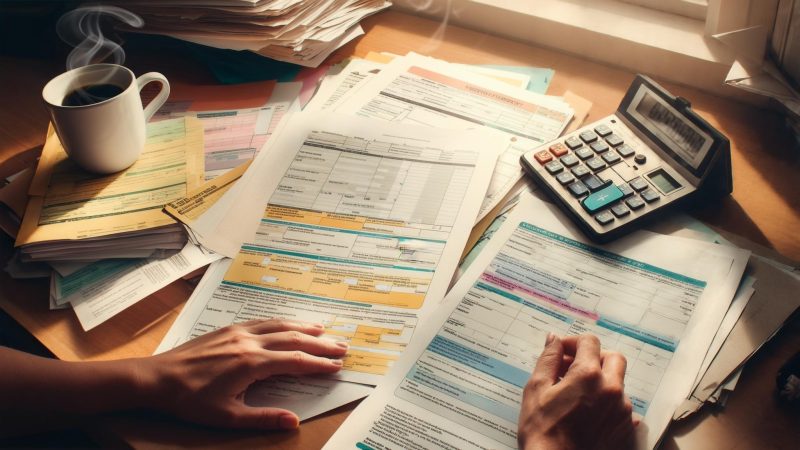
She also learned, through a local Area Agency on Aging outreach worker she met at her church, about the Pennsylvania Property Tax/Rent Rebate Program. According to the Pennsylvania Department of Revenue, the program provides rebates of up to $1,000 for eligible homeowners age 65 and older, based on income. For the 2025 claim year, the income limit for homeowners was $45,000 — a threshold Patricia falls under. She had never applied. “I didn’t know it existed,” she said, shaking her head slowly. “Nobody told me.”
The Turning Point: A Phone Call She Almost Didn’t Make
The outreach worker at Patricia’s church — a volunteer with a local senior services organization — sat with her for about an hour and walked through several programs. Patricia described the conversation as both a relief and a source of frustration. Relief because there were options she hadn’t known about. Frustration because she had been quietly struggling for nearly three years before anyone had laid them out for her.
The outreach worker helped Patricia identify three immediate steps she could take:
When I spoke with Patricia again a few weeks after our initial conversation, she had submitted her Property Tax/Rent Rebate application and was waiting to hear back. She had also called the Allegheny County housing office and was on a waitlist for a home repair assessment. The furnace was still running.
The Outcome — and What Remains Unresolved
Patricia’s situation, as of late March 2026, is not resolved. It is better-mapped. She is likely to receive a property tax rebate of somewhere between $500 and $1,000 — a meaningful but not transformative sum. The housing repair waitlist in Allegheny County can stretch six to eighteen months, depending on funding cycles and demand. The roof is still leaking. The furnace is still old.
What has changed is that Patricia is no longer navigating entirely alone. She told me that knowing the options exist — even imperfect, slow-moving ones — has reduced some of the ambient dread she carries. “It’s not fixed,” she said. “But at least I know I’m not just waiting for something bad to happen.”
What strikes me most about Patricia’s story is not the hardship itself — though it is real — but the invisibility of it. She is not in crisis in any way that would trigger a safety net response. She owns her home. She has savings. She has a pension. By most administrative definitions, she is fine. But “fine” and “secure” are not the same thing, and the distance between them is where people like Patricia spend their retirement years.
She told me, as I was leaving, that she had mentioned the Property Tax/Rent Rebate to two friends from her old postal route — both retirees, both homeowners, both over 65. Neither had applied. Neither had known. “I’m going to help them fill out the forms,” she said. “Somebody has to.”
She walked me to the door and pointed up at the roofline without drama, the way you point at something you’ve made peace with for now. The patch from last fall’s repair was visible against the older shingles. Spring was coming, and with it, the next round of rain.



Leave a Reply