
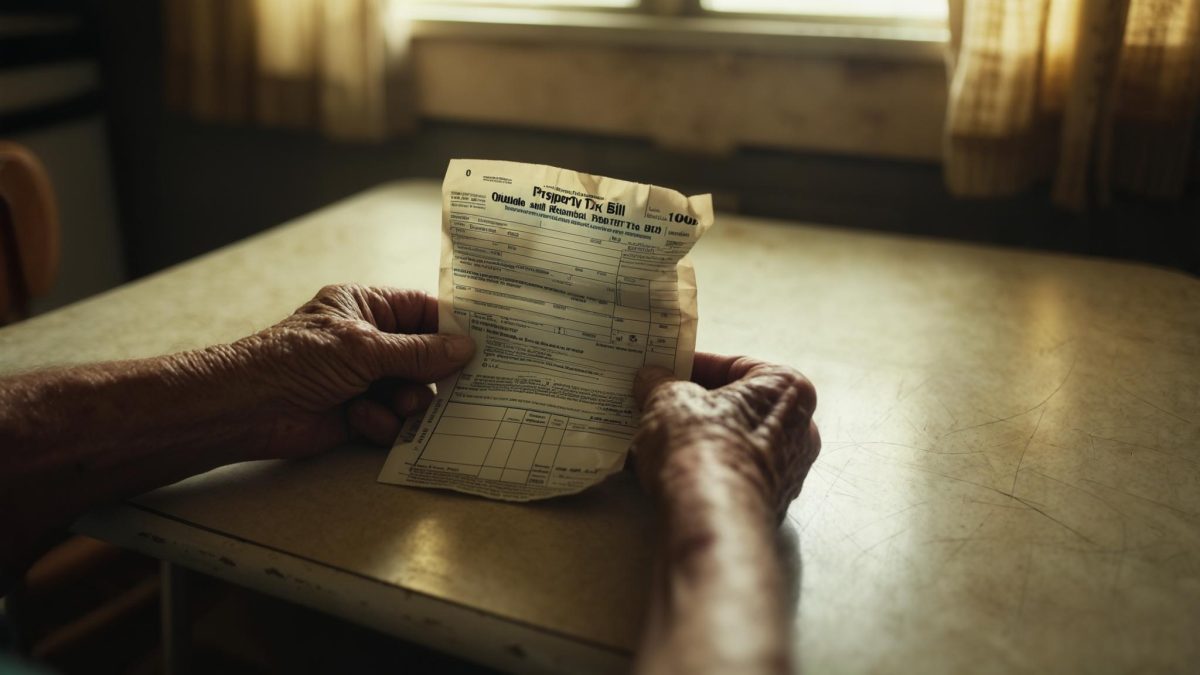
As of early April 2026, the proposed $2,000 tariff dividend check that President Trump first mentioned in November 2025 remains unconfirmed, unfunded, and legally contested. According to reporting from the El Paso Times, members of Congress have introduced bills to formalize tariff rebate payments — but no legislation has passed, and no payment timeline has been set. For millions of Americans in tight financial situations, that uncertainty isn’t abstract. It has a face, a name, and a stack of unopened property tax notices sitting on a kitchen table in Jacksonville, Florida.
I first connected with Denise Ramos through a financial counselor in Duval County who reached out to me in February 2026. The counselor — who asked not to be named — said Denise’s situation represented something she was seeing repeatedly among working-class clients: people who had quietly restructured their debt plans around a government payment that hadn’t been authorized yet. “She needs someone to tell her story,” the counselor told me. “She won’t tell it herself.”
When I sat down with Denise at a diner near her home on a Tuesday morning in late March, she arrived ten minutes early and ordered coffee she barely touched. She is 43 years old, a licensed union electrician with nearly two decades of fieldwork behind her. She has been married for over two decades and her children are grown. Her husband retired eight months ago after a back injury made sustained physical work impossible. She did not want me to use his name.
The Financial Hole That Kept Getting Deeper
Denise’s troubles didn’t start with the tariff check rumor. They started, she told me, about four years ago — a combination of medical bills from her husband’s back procedures, two months of missed union work during a contract dispute, and a credit card balance that metastasized when she only made minimum payments. By late 2024, her credit score had fallen to approximately 579. She described the number with the particular flatness of someone who has said it out loud enough times to drain it of feeling.
Her property taxes on their Jacksonville home — which she and her husband own outright — run approximately $1,870 per year through Duval County. She fell behind during the lean stretch in 2023 and never fully caught up. By January 2026, she owed $2,340 in back taxes, penalties, and interest. Florida law allows counties to sell tax certificates on delinquent properties after two years of nonpayment, a detail that her financial counselor had flagged with urgency.
“I know people don’t want to hear that someone like me — a union worker, homeowner, employed — is this far behind,” Denise told me, pressing both hands flat on the table. “But you miss a few payments when everything hits at once, and then you’re chasing it forever.” She paused. “I don’t talk about this with anyone. Not my sister. Not my friends from the hall.”
Her take-home pay as an electrician runs approximately $54,000 per year before overtime. With her husband’s retirement, they lost what had been roughly $28,000 in annual secondary income. The household went from two paychecks to one without warning, and the margin that had let her slowly chip away at the property tax debt disappeared.
When the $2,000 Promise Entered the Picture
In November 2025, President Trump publicly floated the idea of sending $2,000 checks to Americans funded by tariff revenue — what he called a “tariff dividend.” He later suggested the payments would go out “probably in the middle of next year,” meaning mid-2026. According to an early January update from the El Paso Times, there was still no formal legislation, no eligibility framework, and no IRS mechanism to deliver payments — but the idea had spread widely.
Denise heard about it from a coworker at a job site in December. She went home and looked it up. What she found were news articles, social media posts, and a great deal of ambiguity. She also found something she hadn’t felt in a while: a number that could solve her most pressing problem.
She did not stop making payments on other debts. She did not take on new loans. What she did was stop aggressively overpaying her property tax bill each month, redirecting that approximately $200 monthly surplus toward groceries and utilities while she waited to pay the lump sum with the check. In her mind, it was rational. The math worked — if the check came.
The Waiting, and What It Cost Her
By February 2026, there was still no authorization. According to reporting from APP.com, Americans checking their IRS refund status found no trace of any tariff dividend infrastructure — no portal, no eligibility checker, no official guidance from the IRS refund system. The Supreme Court also issued a ruling questioning the legal foundation of some tariff structures, adding further uncertainty about whether revenue earmarked for the checks would even materialize.
Denise told me she read the February news stories on her phone during a lunch break at a commercial construction site in Riverside. “I kept thinking — okay, it’s delayed, but it’s still coming. People keep writing about it like it’s a real thing.” She pulled up the articles on her phone as she described them, scrolling through headlines as we sat across from each other. “None of them actually say it’s happening. I see that now.”
March came and went. The $2,340 property tax balance grew by $47 in additional interest. Denise’s financial counselor called her the first week of March and laid out the timeline plainly: Duval County’s tax certificate sale for delinquent 2023 taxes was approaching. Waiting was no longer a neutral act.
The Turning Point: Letting Go of the Check
What shifted for Denise wasn’t a single headline. It was a conversation with her financial counselor in mid-March, during which the counselor walked her through what “proposed” actually means in legislative terms. No bill passed. No IRS disbursement system existed. The checks could still happen — but they were not a plan. They were a possibility.
“She said to me, ‘You can’t pay Duval County with a maybe,'” Denise recalled. “And I knew she was right. I just didn’t want to hear it.” Denise set down her coffee cup. “I had built the whole thing in my head. I even thought about what I’d do with the extra sixty dollars after the taxes were paid.”
What replaced the plan was harder but real. Duval County, like many Florida counties, offers installment payment agreements for delinquent property taxes. Denise’s counselor helped her apply for a structured repayment arrangement — spreading the $2,387 balance over a six-month period at a reduced penalty rate. She also filed an amended review request with the IRS after her counselor identified that she may have under-claimed the Earned Income Tax Credit for tax year 2024, given her household income drop following her husband’s retirement.
Where Denise Stands Now
When I spoke with Denise on March 28, she had already made her first installment payment of $398 toward the back property taxes. It came from overtime she’d picked up on a three-week commercial job in Orange Park. She was three payments from being current. Her credit score, she said, hadn’t moved yet — but at least it had stopped falling.
She still checks the news about the $2,000 checks. She told me she can’t fully stop. “I know it’s probably not coming,” she said, “but if it does, it would still change things. I could pay off the rest of the taxes early, maybe get a secured card to start rebuilding my credit.” She wasn’t counting on it anymore. She was just watching. There’s a difference, she insisted — and she’s right.
The counselor who connected us told me afterward that she’s seen this pattern play out with several clients since November — people who paused debt repayment strategies while waiting on an unofficial proposal. Some of them, she said, are in far worse shape than Denise. At least Denise caught it before the certificate sale. At least she had someone in her corner who told her the truth.
Americans who want to track any future authorized payments can monitor official communications from the IRS refund and payment portal and check Benefits.gov for newly authorized federal assistance programs. Those are the places where real money gets announced — not on social media, not in a president’s offhand remark, and not in an article that says a check “could” be coming.
Denise walked out of the diner into a grey Jacksonville morning and checked her phone before she got to her truck. Old habit, she said. She was checking the news. She knows the check probably isn’t coming. But she still looked.



Leave a Reply