

The first thing Eddie Mendez told me was that he almost didn’t come to the meeting. It was a Tuesday evening in October 2025, inside a fluorescent-lit community room at a veterans’ center on the Southside of Jacksonville, Florida. He had driven twenty minutes from his house with a vague excuse ready — he’d use it if anyone asked why he was there. He wasn’t sure he was ready to say the real reason out loud.
I’d been connected with Eddie through that same veterans’ support group, after a program coordinator mentioned that one of their members had recently navigated a complicated tax situation involving debt and an overlooked federal credit. When I reached out, Eddie agreed to talk. “I figured if my story helps somebody else not feel as stupid as I did,” he said over the phone, “then fine.”
When the Bills Started Stacking Up
Eddie Mendez is 46 years old, a petroleum engineer who has worked in the field for nearly two decades. He earns roughly $88,000 a year — a comfortable middle-income salary in Jacksonville, where the cost of living is manageable but not cheap. He remarried four years ago. Between him and his wife, Denise, they have three kids across both of their previous relationships, ranging in age from nine to sixteen.
On paper, things looked okay. In practice, the margins were thin and getting thinner. “I make decent money,” Eddie told me when we sat down at a diner near his office in early November 2025. “But there’s always something. Kids’ stuff. The house. You’re always one thing away from it getting bad.”
That “one thing” arrived in February 2024. His youngest, his nine-year-old daughter Mia, was rushed to the emergency room with acute appendicitis. The surgery went well, but the bills that followed did not. After insurance adjustments, Eddie was left with $14,300 in out-of-pocket costs — charges he hadn’t budgeted for and couldn’t absorb. He put most of it on a credit card. The card already carried a balance. By spring 2024, he was sitting on roughly $17,800 in total credit card debt at an average interest rate of 22.4 percent.
The Debt He Tried Not to Think About
The credit card situation was bad enough. But the auto loan was its own quiet crisis. In late 2021, Eddie had purchased a 2022 Ford F-150 — a truck he needed for occasional fieldwork and that felt, at the time, like a reasonable purchase. He financed $42,000 over 72 months. By mid-2024, the truck’s market value had fallen to approximately $30,400, while he still owed $38,200 on the loan. He was underwater by nearly $7,800 with no clean exit.
This is where Eddie’s personality became its own obstacle. He described himself to me as someone who goes optimistic when things are uncertain — but anxiety hits hard when the numbers are right in front of him. So he stopped looking at the numbers. “I just didn’t open the bank app,” he said, almost laughing at himself. “Like if I didn’t see it, it wasn’t real.”
By October 2025, the minimum payments alone on his credit cards were eating $410 a month. His truck payment was $687. He and Denise were covering everything — the mortgage, three kids’ activities, groceries — but there was nothing left. They hadn’t taken a family trip in two years. Eddie had started skipping his own lunch to cut grocery costs by a few dollars a week.
That’s what finally got him into that community room on a Tuesday evening. Not a financial rock bottom, exactly — more like the slow realization that the ceiling had gotten very, very low.
A Veterans’ Meeting That Changed the Conversation
The veterans’ support group Eddie attends isn’t primarily financial in focus — it’s a peer support circle for men navigating life transitions. But financial stress comes up, as it tends to do. That October evening, Eddie mentioned his situation more or less by accident, during an open sharing portion of the meeting. A program coordinator named Reginald was in the room. Reginald had spent years working with a Volunteer Income Tax Assistance (VITA) site and had a habit of flagging things that didn’t sound right.
What didn’t sound right to Reginald: Eddie mentioned that he and Denise had filed their 2021 taxes jointly for the first time — they’d gotten married in December 2020 — and that he wasn’t sure whether his youngest daughter had been counted correctly as a dependent on that return. He’d filed it himself using tax software and hadn’t looked at it since.
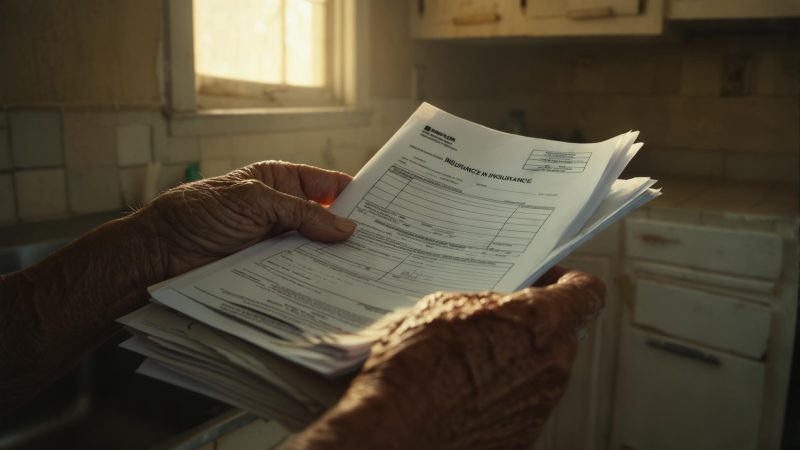
Reginald connected Eddie with a VITA volunteer the following week. Eddie brought in his 2021 return, his 2022 return, and a folder of documents he’d been meaning to organize for over a year. What the VITA volunteer found took Eddie by surprise.
What the Tax Return Actually Showed
The third federal stimulus payment — formally the Economic Impact Payment issued under the American Rescue Plan — went out in early 2021, based on 2020 or 2019 tax data, depending on when people had filed. Because Eddie and Denise had married in December 2020 and filed jointly for the first time on their 2021 return, there was a reconciliation issue involving Mia, who had been listed as a dependent on Eddie’s previous separate filing but hadn’t been correctly accounted for in the third payment calculation.
According to the IRS’s Recovery Rebate Credit guidance, taxpayers who didn’t receive the correct amount in their third Economic Impact Payment could claim the difference on their 2021 tax return — or through an amended return filed before the April 15, 2025 deadline. Eddie’s VITA volunteer determined he had a valid unclaimed credit of $1,400 tied to Mia’s dependent status, plus a smaller calculation error on his standard deduction that resulted in an additional refund of roughly $1,100.
Eddie filed an amended 2021 return — a Form 1040-X — in February 2025. The IRS processed it in eleven weeks. In May 2025, a check arrived for $2,487, which included his credit, the corrected refund, and a small amount of interest accumulated during processing.
It wasn’t a windfall. But it was real money that had been sitting unclaimed, and it gave Eddie something he hadn’t felt in over a year: a small sense of agency. He applied the full amount toward his highest-interest credit card — one carrying a 26.99 percent rate — reducing that balance from $6,200 to $3,713.
Where Eddie Stands Today
When I followed up with Eddie in late March 2026, the situation was improved but not resolved. His total credit card debt had dropped from $17,800 to approximately $12,400 — helped by the refund, a side consulting project that paid him $3,200 in August 2025, and a few months of disciplined minimum-plus payments. He and Denise had also negotiated a lower interest rate on one card by calling and asking — a call that took twelve minutes and dropped the rate from 22.4 percent to 17.9 percent.
The truck is still underwater. Eddie explored trading it in but found the math didn’t work — dealers were quoting him trade-in values of $29,000 to $31,500, while he still owed $34,900. Rolling $4,000 to $6,000 of negative equity into a new loan felt like digging the hole deeper. He’s decided to hold the truck, continue making payments, and wait for the gap to close.
According to the Consumer Financial Protection Bureau, being underwater on an auto loan is one of the most common and least-discussed forms of household financial stress in the United States — particularly for vehicles purchased between 2020 and 2022, when market prices were inflated and depreciation since has been steep. Eddie’s situation is not unusual. That doesn’t make it easier, but it helps explain why there’s no quick fix.
What Eddie did get — and what he told me mattered more than the dollar amount — was the experience of actually opening the folder. Looking at the return. Asking someone who knew more than he did to walk through it with him. “I’d been so sure,” he said, “that if I looked at everything honestly, it would just make me feel worse. And some of it did. But some of it turned out to be fixable. I didn’t know which was which until I looked.”
There’s a VITA site locator available through the IRS’s free tax prep locator that connects taxpayers with volunteer preparers who can review prior-year returns at no cost. Eddie used it. He told me he wished he’d known about it three years earlier.
I left our last conversation thinking about the difference between a rescue and a foothold. Eddie didn’t get rescued. He found a foothold — a piece of money he was already owed, a number he finally agreed to look at, a conversation he almost didn’t have. The truck is still underwater. The credit cards still charge interest every month. But for the first time in two years, Eddie Mendez is opening the bank app.
Related: A Bank Teller Counted on His $2,847 Tax Refund to Cover Medical Bills — The IRS Held It for 52 Days



Leave a Reply