
Roughly 9 million eligible Americans leave the Earned Income Tax Credit unclaimed every year, according to the IRS. That number stopped being abstract to me the afternoon I sat across from Yvonne Holloway in a small conference room at the Fresno County Department of Social Services on a Tuesday in late January 2026.
A social worker named Patricia Delgado had suggested I speak with Yvonne after I’d spent the morning asking staff about the kinds of people walking through their doors lately. “She’s sharp, she works hard, and she has no idea what she’s been leaving on the table,” Patricia told me. That was all the introduction I needed.
Yvonne, 34, is a licensed plumber who has worked the trades in California’s Central Valley for over a decade. She is recently divorced, has no children, and describes herself — with a short, tired laugh — as “starting over at an age when I thought I’d be further along.” She came to the county office not because she was in crisis, exactly, but because she felt one bad month away from one.
The Income She Built Her Life Around — Then Lost
Yvonne’s financial situation, as she walked me through it, is the kind that rarely makes headlines because it lacks a dramatic single event. There was no job loss, no medical emergency, no foreclosure notice. There was just a slow erosion.
For years, she had earned a base wage of roughly $31,500 annually working for a mid-sized plumbing contractor in the Fresno area. But overtime had been steady — sometimes 10 to 12 extra hours per week during construction season — and that overtime pushed her annual take-home to approximately $39,800. That extra $8,300 wasn’t a bonus. It was rent on her budget.
In October 2024, her employer trimmed all overtime across the crew. No explanation beyond “market conditions.” Yvonne told me she wasn’t shocked — she had seen it coming — but the reality of living on $31,500 in Fresno, post-divorce, with a 1,100-square-foot house that was beginning to show its age, was harder than she had anticipated.
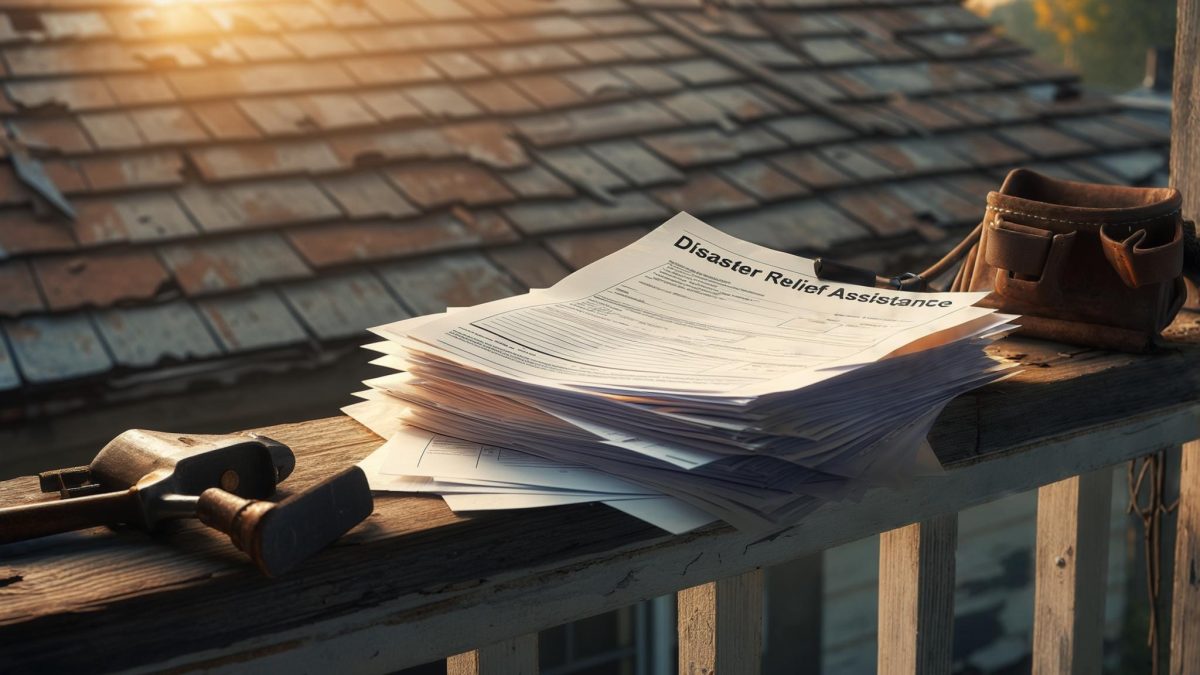
The house had two pressing problems. The roof had developed a leak over the back bedroom — a roofer quoted her $9,200 to replace the damaged section. The water heater, 14 years old, was running inconsistently; another contractor put the replacement cost at $2,600. Nearly $12,000 in repairs, sitting there, untouched.
What She Had Been Filing Past for Years
When Patricia at the county office reviewed Yvonne’s situation, one thing stood out almost immediately: Yvonne had been filing her own taxes using a basic online platform for years, and she had consistently skipped past credits she didn’t fully understand. She wasn’t claiming the Earned Income Tax Credit. She wasn’t claiming the Retirement Savings Contributions Credit, known as the Saver’s Credit. She thought both required “special circumstances” she didn’t have.
They don’t. The EITC is available to low- and moderate-income workers, including those without children. For tax year 2025, the maximum credit for a single filer with no qualifying children is $649, according to the IRS EITC tables. At Yvonne’s income level, she was well within the eligibility range for single filers with no children, which cuts off at approximately $19,104 in investment income with earned income below $18,591 for the maximum — but she also qualified on a phased basis at her income tier.
The Saver’s Credit is different — it rewards low- and moderate-income workers who contribute to a retirement account. For single filers earning under $36,500 in 2025, a contribution of as little as $1,000 to an IRA or 401(k) can generate a federal tax credit of 20 to 50 percent of that contribution, according to IRS Publication 590. Yvonne had a small IRA she had opened years ago and occasionally dropped money into — she had contributed $1,800 in 2025 — but she had never claimed the corresponding credit.
Walking Through the Programs — What Each One Actually Meant
When I spoke with Yvonne a second time, over the phone in mid-February 2026, she had just come back from a free tax preparation session through the IRS’s Volunteer Income Tax Assistance program, known as VITA. Patricia had referred her there specifically because VITA preparers are trained to identify credits that self-filers commonly miss.
The VITA preparer had run the numbers. For tax year 2025, Yvonne’s estimated federal EITC was $612. California’s version, the CalEITC administered through the Franchise Tax Board, added another $255. The Saver’s Credit, at a 20 percent rate on her $1,800 IRA contribution, came to $360. Combined: $1,227 in credits she had never claimed in a year she badly needed them.
“I just sat there,” Yvonne told me. “He showed me the screen and I just sat there. I kept thinking about all the years I filed by myself and clicked past those screens because I didn’t think they applied to me.” She paused. “I don’t know what to do with that feeling, honestly.”
The Repairs, the Retirement Worry, and What $1,227 Can and Cannot Do
I want to be honest about what this outcome looks like, because it is not a rescue. It is a partial foothold.
The $1,227 Yvonne stood to receive does not touch the $11,800 in home repairs she needs. The leaking roof is still leaking. The aging water heater is still aging. Yvonne told me she was planning to put the full refund toward a temporary roof patch — a $900 stopgap a local contractor said could buy her another year — and keep the remainder in a small emergency fund she had been trying to rebuild since the divorce.
That retirement anxiety is not unfounded. The median retirement savings balance for Americans in their early 30s is estimated at roughly $35,000 to $45,000 by most financial research surveys — Yvonne is well below that range. The Saver’s Credit, while real and meaningful, is not a retirement solution. It is an incentive. The distinction matters.
Yvonne also asked the VITA preparer about amended returns — whether she could go back and claim EITC for prior years. The answer was yes, with limitations. The IRS generally allows amended returns within three years of the original filing deadline. That meant tax years 2022, 2023, and 2024 could potentially be amended. She had not yet decided whether to pursue that.
What Yvonne’s Story Says About the Gap Between Programs and People
What stayed with me after both conversations with Yvonne was not the dollar amounts — though they matter — but the decade-long gap between her eligibility and her awareness. She is not financially illiterate. She files her own taxes. She has a retirement account. She tracks her spending on a spreadsheet she showed me, color-coded by category. She was simply never told.
Patricia, the social worker who connected us, told me she sees versions of Yvonne’s situation regularly. “People who work in the trades, in service jobs — they assume the credits are for people who aren’t working, or who have kids,” she said. “That assumption costs them real money every year.”
When I left Fresno that afternoon, Yvonne was heading back to work — a commercial job in the city’s northeast side that would keep her busy through the end of the month. The roof patch was scheduled for the following Saturday, weather permitting. The water heater was still on the list.
She is resilient in the way that people who have had no other choice tend to be — not loudly, not by declaration, but in the simple fact of continuing to show up. The programs she found won’t close the distance between where she is and where she wants to be. But they are, as she put it simply, “a start that actually started.”
Vivienne Marlowe Reyes is a Senior Tax & Stimulus Writer for American Relief. She covers economic relief programs, federal tax credits, and the financial realities facing working Americans.
Related: She Lost $11,000 in Overtime and Her Rent Rose 30% — Then She Found Out Her Health Plan Was the Real Problem
Related: She Lost $8,400 in Overtime Pay and Banked on Her Tax Refund — Then the IRS Held It for 61 Days
.pvv-faq-section details summary::-webkit-details-marker{display:none}.pvv-faq-section details summary::marker{display:none;content:””}.pvv-faq-section details[open] summary .pvv-faq-arrow{transform:rotate(90deg)}




Leave a Reply